Modern Period-
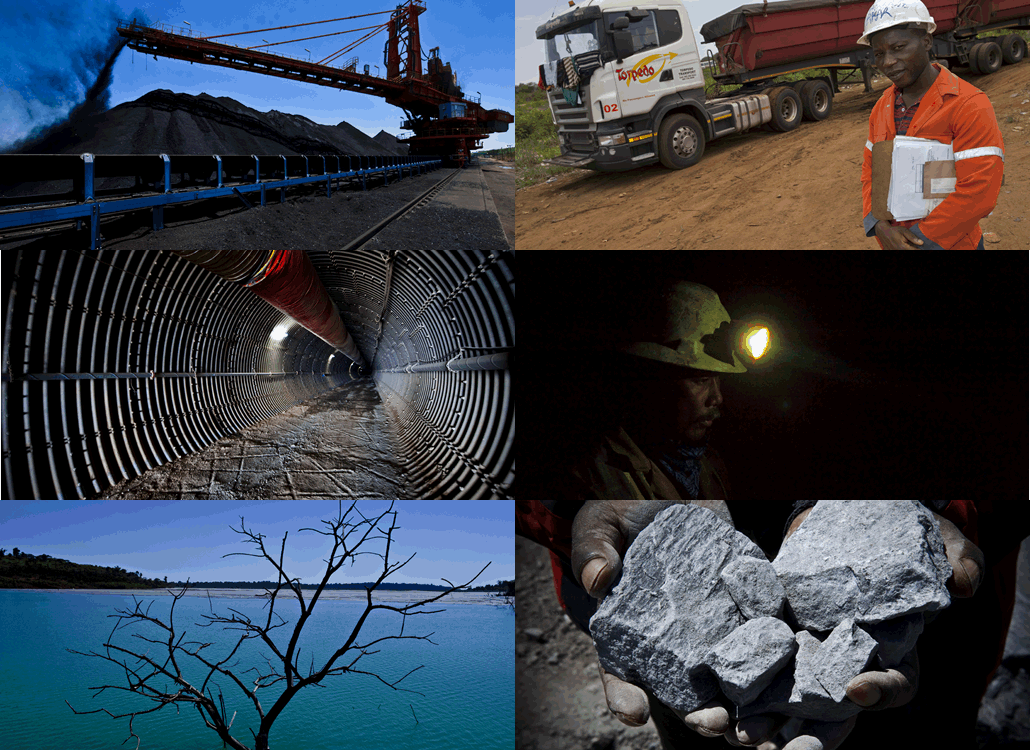
In the early 20th century, the gold and silver rush to the western United States also stimulated mining for base metals such as copper, lead, and iron as well as coal. Areas in modern Montana, Utah, Arizona, and later Alaska became predominate suppliers of copper to the world, which was increasingly demanding copper for electrical and households goods. Canada's mining industry grew more slowly than did the United States' due to limitations in transportation, capital, and U.S. competition; Ontario was the major producer of the early 20th century with nickel, copper, and gold.
Meanwhile, Australia experienced the Australian gold rushes and by the 1850s was producing 40% of the world's gold, followed by the establishment of large mines such as the Mount Morgan Mine, which ran for nearly a hundred years, Broken Hill ore deposit (one of the largest zinc-lead ore deposits), and the iron ore mines at Iron Knob. After declines in production, another boom in mining occurred in the 1960s. Now, in the early 21st century, Australia remains a major world mineral producer.
As the 21st century begins, a globalized mining industry of large multinational corporations has arisen. Peak minerals and environmental impacts have also become a concern. Different elements, particularly rare earth minerals, have begun to increase in demand as a result of new technologies.
Mine Development & Lifecycle-
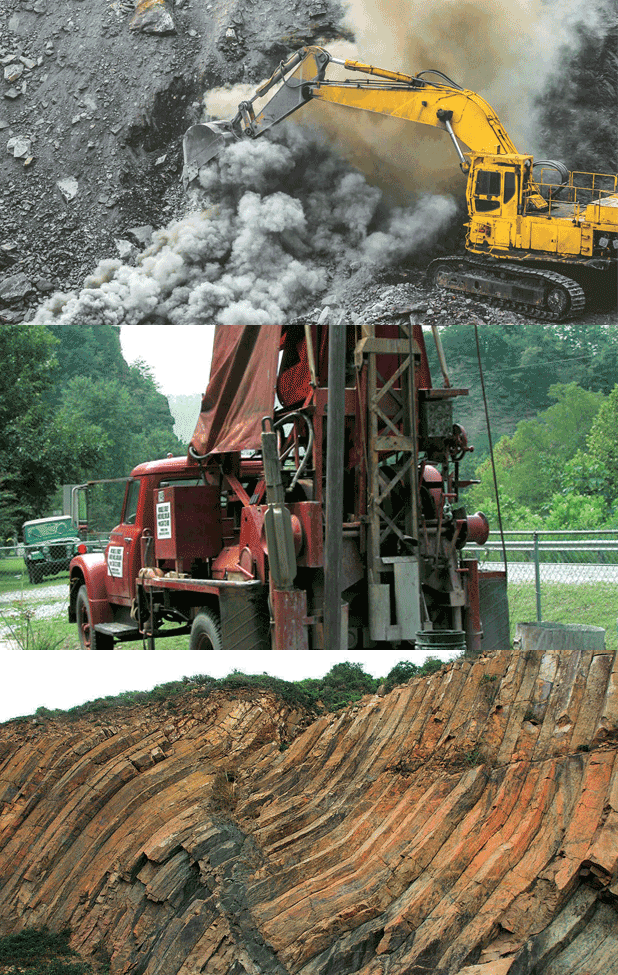
The process of mining from discovery of an ore body through extraction of minerals and finally to returning the land to its natural state consists of several distinct steps. The first is discovery of the ore body, which is carried out through prospecting or exploration to find and then define the extent, location and value of the ore body. This leads to a mathematical resource estimation to estimate the size and grade of the deposit.
This estimation is used to conduct a pre-feasibility study to determine the theoretical economics of the ore deposit. This identifies, early on, whether further investment in estimation and engineering studies is warranted and identifies key risks and areas for further work. The next step is to conduct a feasibility study to evaluate the financial viability, the technical and financial risks, and the robustness of the project.
This is when the mining company makes the decision whether to develop the mine or to walk away from the project. This includes mine planning to evaluate the economically recoverable portion of the deposit, the metallurgy and ore recoverability, marketability and payability of the ore concentrates, engineering concerns, milling and infrastructure costs, finance and equity requirements, and an analysis of the proposed mine from the initial excavation all the way through to reclamation. The proportion of a deposit that is economically recoverable is dependent on the enrichment factor of the ore in the area.
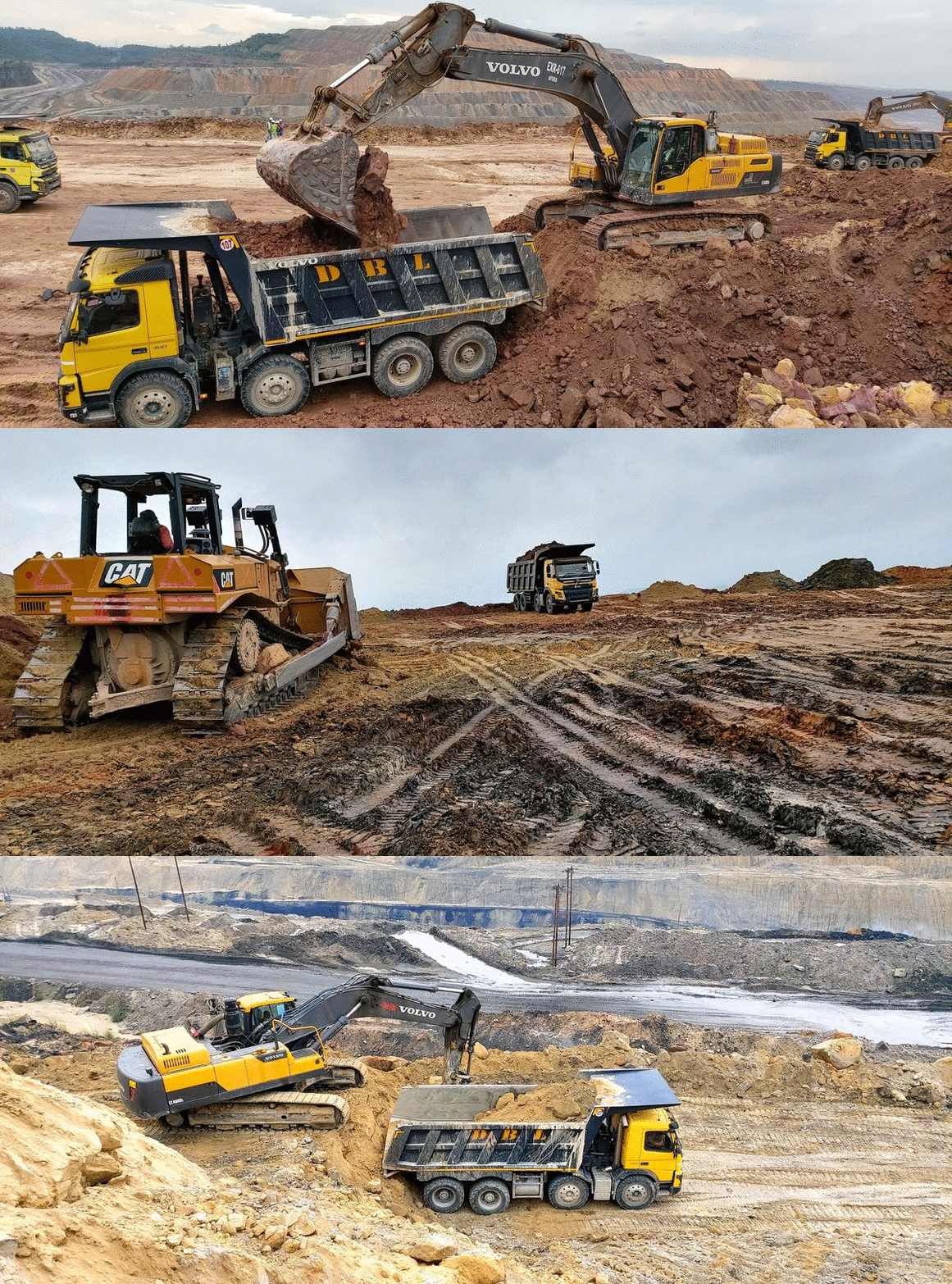
To gain access to the mineral deposit within an area it is often necessary to mine through or remove waste material which is not of immediate interest to the miner. The total movement of ore and waste constitutes the mining process. Often more waste than ore is mined during the life of a mine, depending on the nature and location of the ore body. Waste removal and placement is a major cost to the mining operator, so a detailed characterization of the waste material forms an essential part of the geological exploration program for a mining operation.
Once the analysis determines a given ore body is worth recovering, development begins to create access to the ore body. The mine buildings and processing plants are built, and any necessary equipment is obtained. The operation of the mine to recover the ore begins and continues as long as the company operating the mine finds it economical to do so. Once all the ore that the mine can produce profitably is recovered, reclamation begins to make the land used by the mine suitable for future use.
Mining Techniques-
Mining techniques can be divided into two common excavation types: surface mining and sub-surface (underground) mining. Today, surface mining is much more common, and produces, for example, 85% of minerals (excluding petroleum and natural gas) in the United States, including 98% of metallic ores.
Targets are divided into two general categories of materials: placer deposits, consisting of valuable minerals contained within river gravels, beach sands, and other unconsolidated materials; and lode deposits, where valuable minerals are found in veins, in layers, or in mineral grains generally distributed throughout a mass of actual rock. Both types of ore deposit, placer or lode, are mined by both surface and underground methods.
Some mining, including much of the rare earth elements and uranium mining, is done by less-common methods, such as in-situ leaching: this technique involves digging neither at the surface nor underground. The extraction of target minerals by this technique requires that they be soluble, e.g., potash, potassium chloride, sodium chloride, sodium sulfate, which dissolve in water. Some minerals, such as copper minerals and uranium oxide, require acid or carbonate solutions to dissolve.
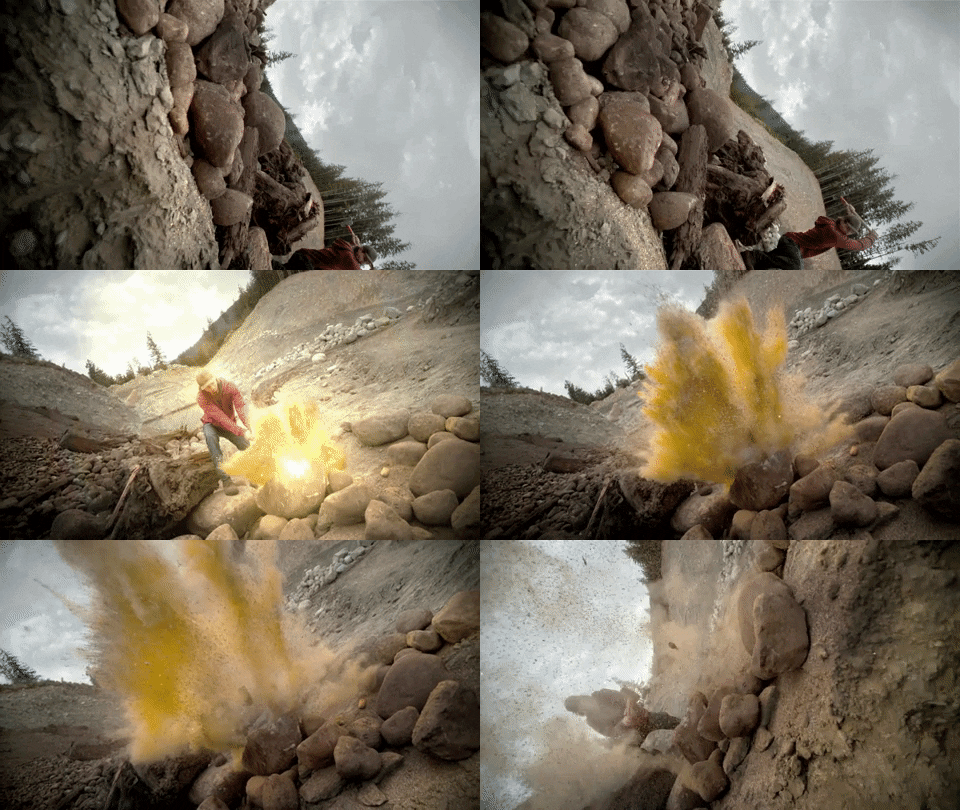
Surface mining is done by removing (stripping) surface vegetation, dirt, and, if necessary, layers of bedrock in order to reach buried ore deposits. Techniques of surface mining include: open-pit mining, which is the recovery of materials from an open pit in the ground, quarrying or gathering building materials from an open-pit mine strip mining, which consists of stripping surface layers off to reveal ore/seams underneath; and mountaintop removal, commonly associated with coal mining, which involves taking the top of a mountain off to reach ore deposits at depth. Most (but not all) placer deposits, because of their shallowly buried nature, are mined by surface methods. Finally, landfill mining involves sites where landfills are excavated and processed.
Underground Mining-
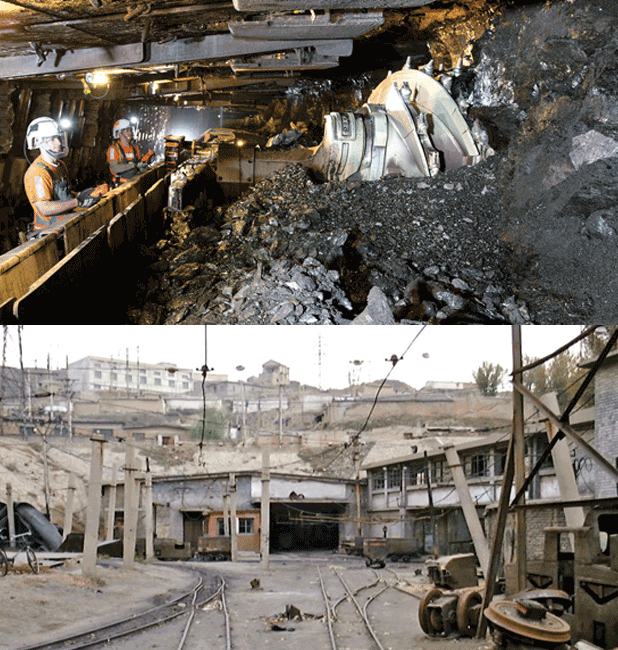
Sub-surface mining consists of digging tunnels or shafts into the earth to reach buried ore deposits. Ore, for processing, and waste rock, for disposal, are brought to the surface through the tunnels and shafts. Sub-surface mining can be classified by the type of access shafts used, the extraction method or the technique used to reach the mineral deposit. Drift mining utilizes horizontal access tunnels, slope mining uses diagonally sloping access shafts, and shaft mining utilizes vertical access shafts. Mining in hard and soft rock formations require different techniques.
Other methods include shrinkage stope mining, which is mining upward, creating a sloping underground room, long wall mining, which is grinding a long ore surface underground, and room and pillar mining, which is removing ore from rooms while leaving pillars in place to support the roof of the room. Room and pillar mining often leads to retreat mining, in which supporting pillars are removed as miners retreat, allowing the room to cave in, thereby loosening more ore. Additional sub-surface mining methods include hard rock mining, which is mining of hard rock (igneous, metamorphic or sedimentary) materials, bore hole mining, drift and fill mining, long hole slope mining, sub level caving, andblock caving.

Environmental Effects-
Environmental issues can include erosion, formation of sinkholes, loss of biodiversity, and contamination of soil, groundwater and surface water by chemicals from mining processes. In some cases, additional forest logging is done in the vicinity of mines to create space for the storage of the created debris and soil. Contamination resulting from leakage of chemicals can also affect the health of the local population if not properly controlled.Extreme examples of pollution from mining activities include coal fires, which can last for years or even decades, producing massive amounts of environmental damage.
Mining companies in most countries are required to follow stringent environmental and rehabilitation codes in order to minimize environmental impact and avoid impacting human health. These codes and regulations all require the common steps of environmental impact assessment, development of environmental management plans, mine closure planning(which must be done before the start of mining operations), and environmental monitoringduring operation and after closure. However, in some areas, particularly in the developing world, government regulations may not be well enforced.
For major mining companies and any company seeking international financing, there are a number of other mechanisms to enforce good environmental standards. These generally relate to financing standards such as the Equator Principles, IFC environmental standards, and criteria for Socially responsible investing. Mining companies have used this oversight from the financial sector to argue for some level of self-policing. In 1992, a Draft Code of Conduct for Transnational Corporations was proposed at the Rio Earth Summit by the UN Centre for Transnational Corporations (UNCTC), but the Business Council for Sustainable Development (BCSD) together with the International Chamber of Commerce (ICC) argued successfully for self-regulation instead.
This was followed by the Global Mining Initiative which was begun by nine of the largest metals and mining companies and which led to the formation of the International Council on Mining and Metals, whose purpose was to "act as a catalyst" in an effort to improve social and environmental performance in the mining and metals industry internationally. The mining industry has provided funding to various conservation groups, some of which have been working with conservation agendas that are at odds with an emerging acceptance of the rights of indigenous people – particularly the right to make land-use decisions.
Certification of mines with good practices occurs through the International Organization for Standardization (ISO). For example, ISO 9000 and ISO 14001, which certify an "auditable environmental management system", involve short inspections, although they have been accused of lacking rigor183–4 Certification is also available through Ceres' Global Reporting Initiative, but these reports are voluntary and unverified. Miscellaneous other certification programs exist for various projects, typically through nonprofit groups.
Mining Industry-
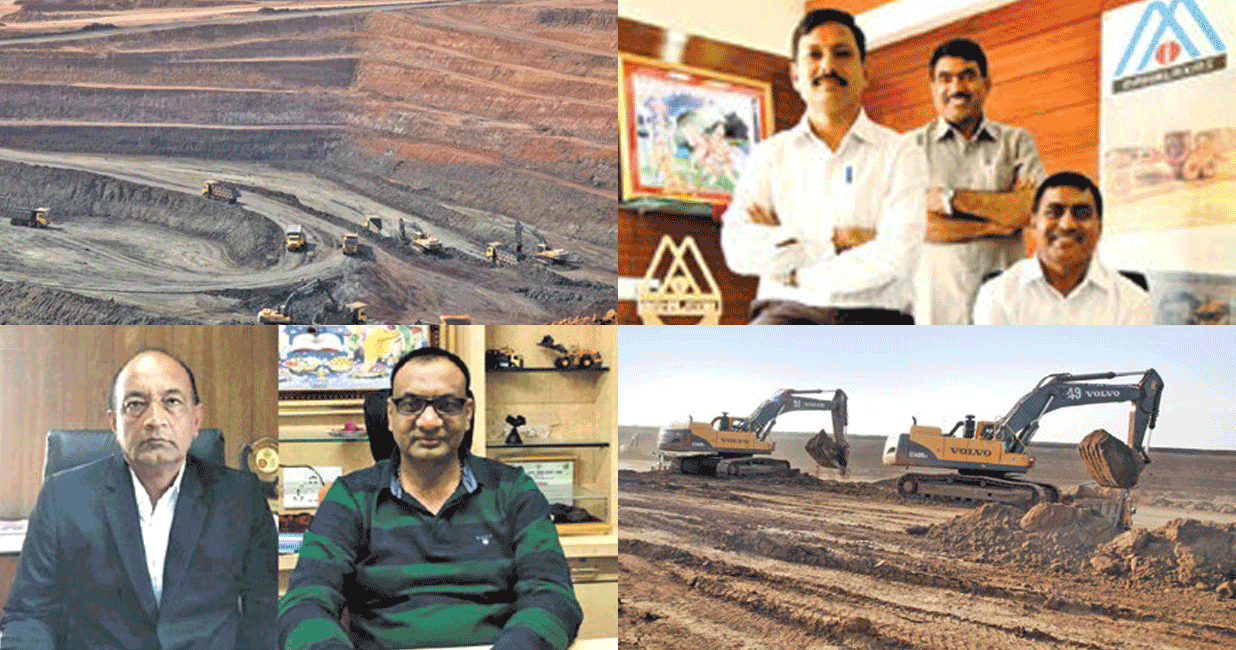
Mining exists in many countries. London is known as the capital of global "mining houses" such as Rio Tinto Group, BHP Billiton, and Anglo American PLC. The US mining industry is also large, but it is dominated by the coal and other nonmetal minerals (e.g., rock and sand), and various regulations have worked to reduce the significance of mining in the United States. In 2007 the total market capitalization of mining companies was reported at US$962 billion, which compares to a total global market cap of publicly traded companies of about US$50 trillion in 2007. In 2002, Chile and Peru were reportedly the major mining countries of South America. The mineral industry of Africa includes the mining of various minerals; it produces relatively little of the industrial metals copper, lead, and zinc, but according to one estimate has as a percent of world reserves 40% of gold, 60% of cobalt, and 90% of the world's platinum group metals. Mining in India is a significant part of that country's economy. In the developed world, mining in Australia, with BHP Billiton founded and headquartered in the country, and mining in Canada are particularly significant. For rare earth minerals mining, China reportedly controlled 95% of production in 2013. While exploration and mining can be conducted by individual entrepreneurs or small businesses, most modern-day mines are large enterprises requiring large amounts of capital to establish. Consequently, the mining sector of the industry is dominated by large, often multinational, companies, most of them publicly listed. It can be argued that what is referred to as the 'mining industry' is actually two sectors, one specializing in exploration for new resources and the other in mining those resources. The exploration sector is typically made up of individuals and small mineral resource companies, called "juniors", which are dependent on venture capital. The mining sector is made up of large multinational companies that are sustained by production from their mining operations. Various other industries such as equipment manufacture, environmental testing, and metallurgy analysis rely on, and support, the mining industry throughout the world. Canadian stock exchanges have a particular focus on mining companies, particularly junior exploration companies through Toronto'sTSX Venture Exchange; Canadian companies raise capital on these exchanges and then invest the money in exploration globally.Some have argued that below juniors there exists a substantial sector of illegitimate companies primarily focused on manipulating stock prices.
Mining operations can be grouped into five major categories in terms of their respective resources. These are oil and gas extraction, coal mining, metal ore mining, nonmetallic mineral mining and quarrying, and mining support activities. Of all of these categories, oil and gas extraction remains one of the largest in terms of its global economic importance. Prospecting potential mining sites, a vital area of concern for the mining industry, is now done using sophisticated new technologies such as seismic prospecting and remote-sensing satellites. Mining is heavily affected by the prices of the commodity minerals, which are often volatile. The 2000s commodities boom ("commodities supercycle") increased the prices of commodities, driving aggressive mining. In addition, the price of gold increased dramatically in the 2000s, which increased gold mining; for example, one study found that conversion of forest in the Amazon increased six-fold from the period 2003–2006 (292 ha/yr) to the period 2006–2009 (1,915 ha/yr), largely due to artisanal mining.

Safety-
Safety has long been a concern in the mining business especially in sub-surface mining. The Courrières mine disaster, Europe's worst mining accident, involved the death of 1,099 miners in Northern France on March 10, 1906. This disaster was surpassed only by the Benxihu Colliery accident in China on April 26, 1942, which killed 1,549 miners. While mining today is substantially safer than it was in previous decades, mining accidents still occur. Government figures indicate that 5,000 Chinese miners die in accidents each year, while other reports have suggested a figure as high as 20,000. Mining accidents continue worldwide, including accidents causing dozens of fatalities at a time such as the 2007Ulyanovskaya Mine disaster in Russia, the 2009 Heilongjiang mine explosion in China, and the 2010 Upper Big Branch Mine disaster in the United States.
Mining ventilation is a significant safety concern for many miners. Poor ventilation inside sub-surface mines causes exposure to harmful gases, heat, and dust, which can cause illness, injury, and death. The concentration of methane and other airborne contaminants underground can generally be controlled by dilution (ventilation), capture before entering the host air stream (methane drainage), or isolation (seals and stoppings). Rock dusts, including coal dust and silicon dust, can cause long-term lung problems including silicosis, asbestosis, andpneumoconiosis (also known as miners lung or black lung disease). A ventilation system is set up to force a stream of air through the working areas of the mine. The air circulation necessary for effective ventilation of a mine is generated by one or more large mine fans, usually located above ground. Air flows in one direction only, making circuits through the mine such that each main work area constantly receives a supply of fresh air. Watering down in coal mines also helps to keep dust levels down: by spraying the machine with water and filtering the dust-laden water with a scrubber fan, miners can successfully trap the dust.
Gases in mines can poison the workers or displace the oxygen in the mine, causingasphyxiation. For this reason, the U.S. Mine Safety and Health Administrationrequires that groups of miners in the United States carry gas detection equipment that can detect common gases, such as CO, O2, H2S, CH4, as well as calculate % Lower Explosive Limit. Regulation requires that all production stop if there is a concentration of 1.4% of flammable gas present. Additionally, further regulation is being requested for more gas detection as newer technology such as nanotechnology is introduced.
Ignited methane gas is a common source of explosions in coal mines, which in turn can initiate more extensive coal dust explosions. For this reason, rock dusts such aslimestone dust are spread throughout coal mines to diminish the chances of coal dust explosions as well as to limit the extent of potential explosions, in a process known as rock dusting. Coal dust explosions can also begin independently of methane gas explosions. Frictional heat and sparks generated by mining equipment can ignite both methane gas and coal dust. For this reason, water is often used to cool rock-cutting sites.
Miners utilize equipment strong enough to break through extremely hard layers of the Earth's crust. This equipment, combined with the closed work space in which underground miners work, can cause hearing loss. For example, a roof bolter (commonly used by mine roof bolter operators) can reach sound power levels of up to 115 dB. Combined with thereverberant effects of underground mines, a miner without proper hearing protection is at a high risk for hearing loss. By age 50, nearly 90% of U.S. coal miners have some hearing loss, compared to only 10% among workers not exposed to loud noises.Roof bolters are among the loudest machines, but auger miners, bulldozers, continuous mining machines, front end loaders, and shuttle cars and trucks are also among those machines most responsible for excessive noise in mine work.
Since mining entails removing dirt and rock from its natural location, thereby creating large empty pits, rooms, and tunnels, cave-ins as well as ground and rock falls are a major concern within mines. Modern techniques for timbering and bracing walls and ceilings within sub-surface mines have reduced the number of fatalities due to cave-ins, but ground falls continue to represent up to 50% of mining fatalities. Even in cases where mine collapses are not instantly fatal, they can trap mine workers deep underground. Cases such as these often lead to high-profile rescue efforts, such as when 33 Chilean minerswere trapped deep underground for 69 days in 2010.
High temperatures and humidity may result in heat-related illnesses, including heat stroke, which can be fatal. The presence of heavy equipment in confined spaces also poses a risk to miners. To improve the safety of mine workers, modern mines use automation and remote operation including, for example, such equipment as automated loaders and remotely operated rockbreakers. However, despite modern improvements to safety practices, mining remains a dangerous occupation throughout the world.